Share:
Table of Contents
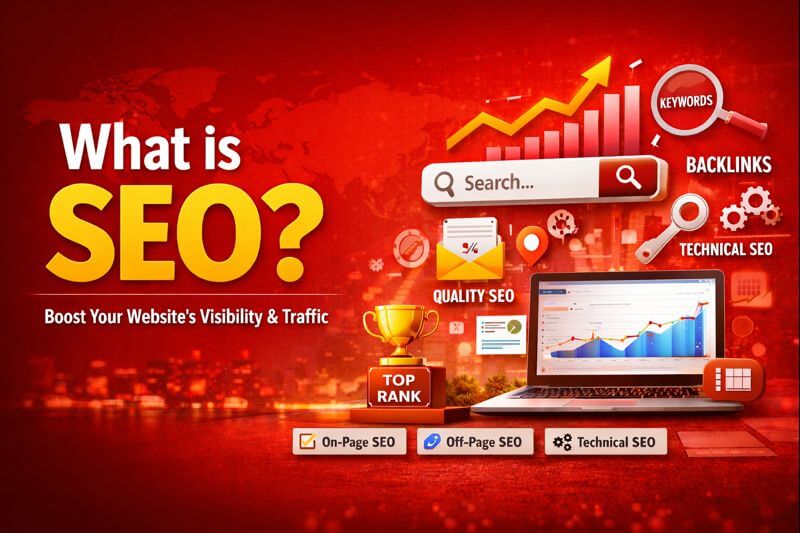
What Is SEO? A Clear, Practical Guide to Search Engine Optimization
Search Engine Optimization (SEO) is often explained in one line: “SEO helps websites rank higher on Google.”
While that’s technically true, it barely scratches the surface.
In reality, SEO is not about tricks, shortcuts, or pleasing algorithms. It is about understanding people, solving their problems, and making your website the most trustworthy answer available in a way search engines can easily recognize and recommend.
This guide explains what SEO really is, how it works behind the scenes, and why it matters more than ever in today’s competitive digital landscape.
What Is SEO (Search Engine Optimization)?
SEO is the practice of improving a website so it appears prominently in organic (unpaid) search engine results when users search for relevant topics, questions, or solutions.
But strong SEO does more than drive traffic.
It ensures that:
-
The right people find your website
-
Your content answers real user intent
-
Search engines trust your site enough to rank it above competitors
Unlike paid ads, SEO focuses on long-term visibility, not temporary exposure. When done correctly, SEO creates a digital asset that continues to attract qualified visitors even when ad budgets stop.
How Search Engines Actually Work
Most competitors explain SEO in fragments. Let’s connect the full picture.
1) Crawling: Discovering Content
Search engines like Google use automated programs called crawlers or bots. These bots scan the internet by following links, discovering new pages, updated content, and changes on websites.
If your site has broken links, poor structure, or blocked pages, crawlers may never fully see your content no matter how good it is.
2) Indexing: Understanding and Storing Pages
Once crawled, pages are analyzed and stored in Google’s massive database (the index).
Here, search engines try to understand:
- What the page is about
- Which keywords it relates to
- How useful and unique the content is
If Google can’t clearly understand your page, it won’t rank it confidently.
3) Ranking: Choosing the Best Answer
When a user searches, Google’s algorithm evaluates hundreds of ranking signals to decide which pages deserve top positions.
These include:
- Content relevance and depth
- Website authority and trust
- User experience (speed, mobile usability, clarity)
- Engagement signals (clicks, time on page)
- Freshness and accuracy
SEO is the process of aligning your website with these signals without manipulation.
The Role of User Intent (Where Most Competitors Fail)
One major gap in most SEO explanations is user intent.
SEO is no longer about matching keywords. It’s about matching why someone is searching.
There are four main types of intent:
- Informational – “What is SEO?”
- Navigational – “Google Search Console login”
- Commercial – “Best SEO services for small businesses”
- Transactional – “Hire SEO consultant”
High-performing SEO content:
- Understands the intent behind each search
- Delivers exactly what the user expects
- Removes confusion, fluff, and friction
Search engines reward pages that solve problems efficiently, not those stuffed with keywords.
Core Components of SEO
1. On-Page SEO: Content and Context
On-page SEO focuses on what users see and read.
This includes:
- Clear, descriptive page titles and headings
- Naturally placed keywords (not forced)
- High-quality, original content
- Logical structure and easy readability
- Internal linking that guides users
Great on-page SEO makes content easy to consume for humans and easy to interpret for search engines.
2. Off-Page SEO: Trust and Authority
Off-page SEO is about reputation.
The strongest signal here is backlinks links from other credible websites pointing to yours.
Think of backlinks as votes of confidence:
- A link from a trusted site boosts credibility
- Multiple low-quality links can hurt rankings
- Authority grows through genuine mentions, PR, and valuable content
Off-page SEO tells search engines:
“Others trust this website so you can too.”
3. Technical SEO: The Foundation Most Ignore
Technical SEO ensures your website functions smoothly for both users and search engines.
It includes:
- Fast page load speeds
- Mobile-friendly design
- Secure HTTPS connections
- Clean URLs and site architecture
- Proper indexing and crawl control
You can have excellent content, but without strong technical SEO, your rankings will always be limited.
Why SEO Is So Important for Businesses Today
1. Visibility Where Decisions Start
Most buying journeys begin with a search.
If your website doesn’t appear, your brand effectively doesn’t exist to that audience.
2. Sustainable, Cost-Effective Growth
Unlike ads, SEO compounds over time.
One well-optimized page can generate traffic and leads for years without recurring costs.
3. Credibility and Brand Authority
Users trust search engines. Ranking high automatically positions your brand as a leader even before visitors read a single word.
4. Better User Experience
SEO forces you to improve clarity, speed, and usability.
What’s good for users is good for rankings and vice versa.
SEO Is Not a One-Time Task
A common misconception is that SEO is “done” after optimization.
In reality, SEO is:
- Ongoing
- Data-driven
- Adaptive to algorithm updates and user behavior
Search trends evolve. Competitors improve. Google updates its systems.
SEO success comes from consistent improvement, not shortcuts.
SEO Is About Value, Not Tricks
SEO today is not about gaming Google.
It is about earning attention by being genuinely helpful.
Websites that win at SEO:
- Understand their audience deeply
- Publish content with purpose
- Build trust through quality, not manipulation
- Invest in long-term digital credibility
If you focus on value first, SEO becomes not just a marketing tactic but a growth engine.